


Bermudagrass Seed & Fertilizer Bundle
Price range: $29.99 through $60.99
- Our top-performing Bermudagrass seed bred for Southern lawns and hot climates
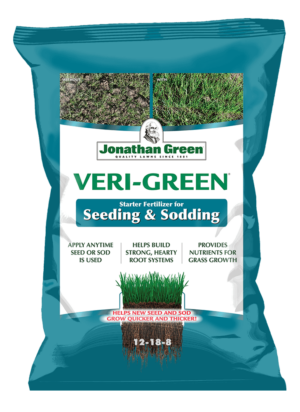
- Veri-Green starter fertilizer that is rich in phosphorus
- Designed to thrive in extreme heat and full sun with excellent summer durability
- Features aggressive vertical and lateral rooting for fast spreading and quick recovery
- Bermuda Grass germinates after the soil temperature reaches 65 F.
- Stays green later into the fall than traditional Bermudagrass varieties
- Heat- and cold-tolerant to help reduce the need for winter overseeding
What’s Included
Real Bermudagrass Lawns


Product Overview
The Jonathan Green Blue Panther® Bermudagrass Seed & Fertilizer Bundle is the ideal starting point for any warm-season seeding project. Whether you are establishing a brand-new Bermudagrass lawn or overseeding to improve density and repair thin areas, this bundle provides everything needed to give new grass seedlings a strong, healthy start.
This lawn care bundle features Blue Panther® Bermudagrass Grass Seed, a premium warm-season grass designed to thrive in full sun and intense Southern heat. Known for its aggressive spreading habit, dark green color, and excellent durability, Blue Panther® Bermudagrass establishes quickly and stands up to heavy foot traffic. Its improved cold tolerance helps maintain color later into the fall compared to traditional Bermudagrass varieties.
To support successful establishment, this bundle also includes Veri-Green Starter Lawn Fertilizer for Seeding and Sodding. This phosphorus-rich formula promotes strong root development and vigorous early growth, helping new Bermudagrass seedlings build deep, dense root systems. Apply the starter fertilizer the same day you seed to encourage faster germination and stronger turf development.
Together, Blue Panther® Bermudagrass Seed and Veri-Green Starter Fertilizer create the foundation for a thick, durable, heat-tolerant lawn built for Southern climates.
Coverage Guide
Coverage:
Shipping & Returns
Shipping
- Free ground shipping now available on orders of $75 or more! For smaller orders, shipping costs are calculated at checkout.
- We ship orders the same day if placed by 2PM EST (later orders will be shipped the next day).
- Orders are not shipped or delivered on weekends or holidays.
- We offer ground and expedited shipping.
Returns
- We offer 30-day free returns for replacement or full refund for items that are damaged or defective (shipping included). If damaged by the carrier, please file a claim with them.
- If your items have been used or aren’t in the original packaging, we will give you a refund (minus the cost of shipping) based on the condition of the product.
View our complete shipping and return policy. If you have questions about your order, please contact our customer service team at [email protected].
Don’t Forget These Essentials
-
 Lawn Spreaders
Jonathan Green Standard Broadcast Spreader
From $124.99 -
 Soil Amendments
Love Your Soil® Hard Soil Supplement
From $32.99 Sold out This product has multiple variants. The options may be chosen on the product page -
Soil Amendments
Mag-I-Cal® for Lawns in Acidic Soil
From $29.99 Sold out This product has multiple variants. The options may be chosen on the product page -
Lawn Fertilizers
Veri-Green Starter Fertilizer for Seeding & Sodding
From $19.99 Sold out This product has multiple variants. The options may be chosen on the product page


Grass Type(s)
Bermudagrass
When to Apply
The best time to seed or overseed a Bermudagrass lawn is late spring through early summer, when soil temperatures are consistently 55–70°F or warmer and the grass is actively growing. In most Southern regions, this typically falls between late March and June. Seeding during this window allows Bermudagrass to germinate quickly, establish strong roots, and spread aggressively throughout the peak growing season. Avoid fall seeding, as cooler temperatures can prevent proper establishment before dormancy.
Sunlight Requirements
6+ hours of sunlight per day
Traffic Tolerance
Blue Panther® Bermuda Grass Seed can withstand heavy traffic
Germination Rate
14 – 21 days
Use With Other Products
Heat-tolerant grass seed can be applied with any of our soil amendments, or straight fertilizers. We do not recommend applying grass seed with any weed controls. You must wait at least 30 days to seed after applying weed control. For a full list of wait times, visit this FAQ page.
Watering Tips
- For best germination, water seeded areas twice a day, for 5 – 10 minutes to keep the seedbed moist. Continue watering daily for a few weeks until the grass plants reach a height of 2 – 2.5 inches.
- A good rule of thumb for established lawns, is to give them one inch of water per week including rainfall. To avoid your lawn going dormant in the summer, you may need to increase your watering rate.
Mowing Tips
- Begin mowing your new lawn when the new grass has reached a height of 2 – 3 inches.
- Be careful not to scalp your lawn, as low mowing will stress the root system and encourage the growth of weeds. When mowing, only take off the top third of the grass blade.
Shelf Life
Our recommendations for storing your grass seed:
Place it in a cool dry place, off of the ground, out of direct sunlight, and keep it away from moisture. Under these conditions, grass seed will last at least two years.
Product Label
Always read and follow the product label before use.
Safety Data Sheets can be found at www.jonathangreen.com/safety-data-sheets-sds. If you have a specific question, do not hesitate to contact us.
Manufacturer

Spreader

Model

Rate

Manufacturer
Spreader
Model
Rate
What is your most heat tolerant grass seed?
Blue Panther® Bermudagrass Seed is our top-performing warm-season grass for Southern lawns. Designed to thrive in extreme heat and full sun, it delivers aggressive spreading, exceptional durability, and superior heat tolerance during peak summer conditions. Unlike cool-season blends formulated for the transition zone, Blue Panther is purpose-built for warm climates and offers improved cold tolerance to help maintain green color later into the fall.
Features You’ll Love
Extreme Heat and Drought Tolerance

Thrives in the South

Requires Less Water and Fertilizer

How to Seed
Prepare
Mow
To ensure the seed reaches the soil, mow the lawn on the lowest setting and bag the clippings.
Rake
Use a metal rake to remove debris, rocks, and thatch that has built up. Rake vigorously to create grooves in the top layer of soil. Fill in any holes and level the ground with additional topsoil if necessary.
Amend
Test your soil pH to check that it is in a healthy range for grass plants to grow. Optimal pH for cool-season lawns is 6.2 to 7.0. For soils with a pH below 6.2, use Jonathan Green Mag-I-Cal® Plus for Lawns in Acidic & Hard Soil to rapidly raise soil pH. For a pH above 7.0, use Mag-I-Cal® Plus for Lawns in Alkaline & Hard Soil to lower soil pH.
Apply
Set
To evenly distribute grass seed, use a spreader suitable for your specific lawn size. Set the spreader according to the recommended setting on the packaging or use our Spreader Settings Tool above. Make sure to update the setting with each product you apply.
Spread
Carefully read and follow all instructions on the product labels prior to application. Before spreading, calculate the amount of seed needed for the square footage of your lawn.
For new lawns:
Start by filling the spreader with half of the grass seed. Apply the seed around the perimeter of the lawn to establish a turning area. Make straight passes back and forth across the length of the lawn in one direction (north to south) and then the remaining seed in a perpendicular direction (east to west) within the outlined area. Overlap slightly between passes and close the hopper when turning. Walk at a steady pace for even distribution. This crisscross pattern ensures even coverage and helps prevent bare spots in new lawns.
For overseeding:
Begin by spreading the seed along the perimeter of your lawn. Make straight passes back and forth across the length of the lawn in a mowing pattern until the entire area is covered. Overlap slightly between passes and close the hopper when turning. Walk at a steady pace for even distribution.
Rake
After seeding, gently rake the soil with a metal rake to incorporate the grass seed into the top quarter-inch of soil. This will improve seed-to-soil contact and promote germination.
Fertilize
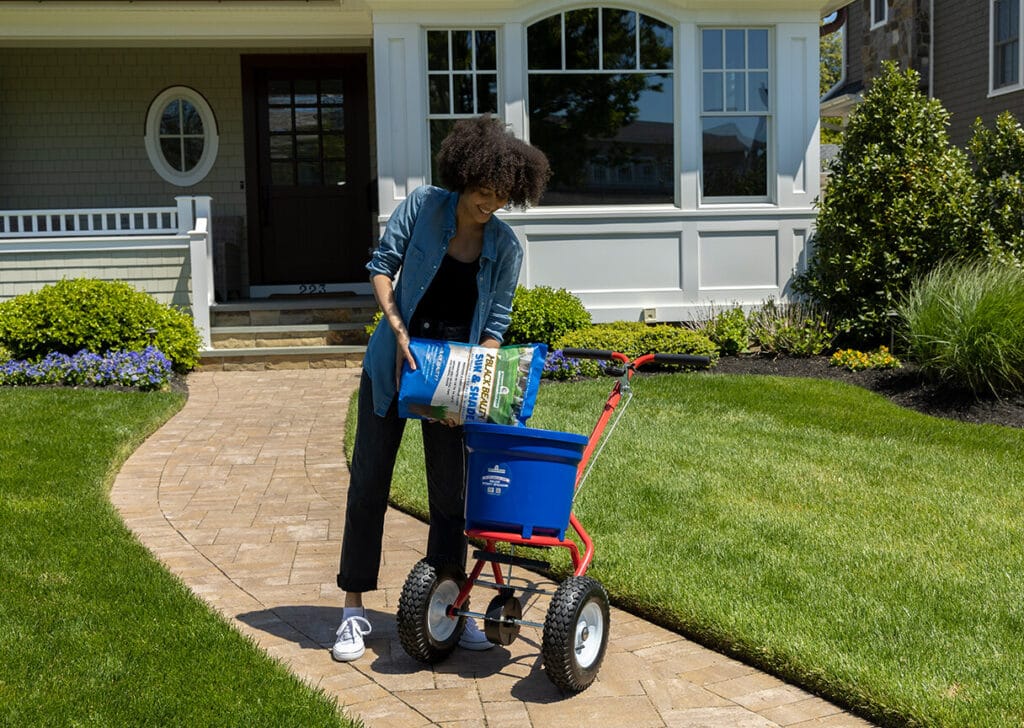
Maximize seedling growth and root development by applying starter fertilizer along with the seed. Fill your spreader on a hard surface to avoid fertilizer burn. Start by applying fertilizer around the lawn’s perimeter to establish a turning area. Then, make back-and-forth passes within the outlined area, ensuring overlap for complete coverage. Sweep any excess granules off of hard surfaces and back onto the lawn.
Water
Immediately after seeding, thoroughly water the area but not to the point of run-off or puddles.
Maintain
Water
Keep the soil consistently moist by watering lightly several times a day, or as needed, to prevent drying out. Avoid excessive watering that may cause pooling or runoff. Continue watering daily for a few weeks until the grass plants reach a height of 2 – 2.5 inches. As the grass seed germinates, gradually reduce the frequency of watering while increasing the amount applied to encourage deeper root growth.
Mow
Begin mowing when the new grass has reached a height of 2 – 3 inches. Make sure the mower has sharp blades. Be careful not to scalp the lawn, low mowing will stress the root system and encourage the growth of weeds.
